
Psychic Telephone · 17
Joanie

Joanie calls what she does subjective mediumship—receiving messages from the spirit world. An objective medium, in contrast, could look over your shoulder and see the dead in the room with you and say things like, There’s a man in a hat, in a red tie, and he’s got a beard and he’s holding a rocking horse. That’s objective mediumship—seeing things concretely. Subjective mediumship is, during a sitting she’s most likely to see images on a screen in her head, or a combination of things. There are things she hears in her head, even sometimes in her ears, like real sounds coming from outside of her. Sometimes it’s just a knowing. The knowing is like a sixth sense—is a sixth sense.
She does sometimes see concrete things, spirits in physical form, but usually only when she’s on her own, walking around in the world. And those messages tend to relate to her and her own life, not to someone else. There’s also something called trance mediumship, which is the one that’s like, possessed by. They’re talking, they’re doing a voice—Oh, I’m your grandmother! And she has met some mediums who do that, and she thinks that’s valid? But there’s something there that always reeks of the charlatan. Reeks of the charlatan. Maybe it’s because Joanie’s a performer. It feels like it would be forced or something. Too like—she might as well just go get her fake mustache and put it on.
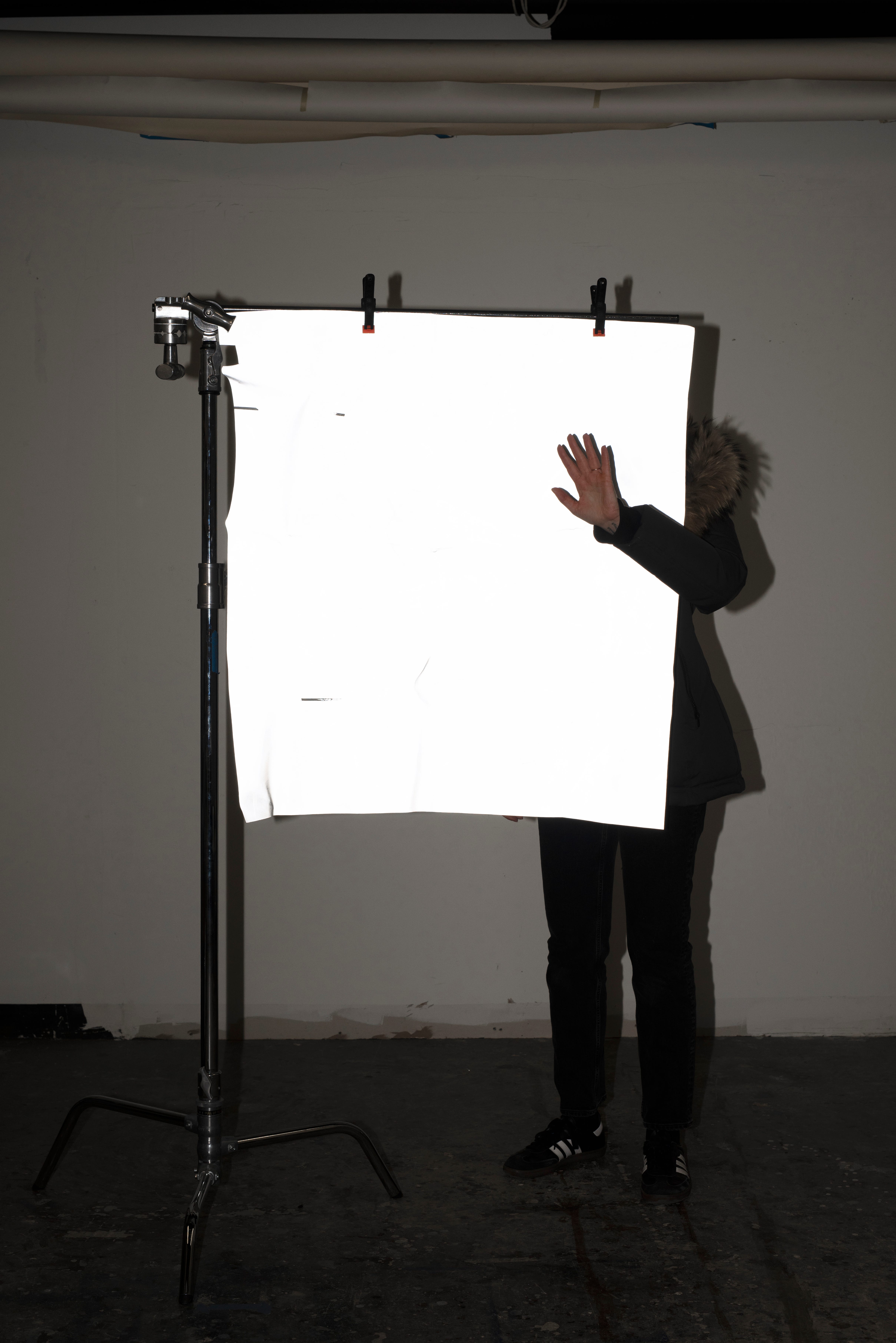
Joanie prefers to refer to herself as intuitive rather than use a word like psychic. Psychic has such a tawdry, tarnished history. It makes you think of so many street signs in shady corners of the city. And there’s a whole tradition of charlatanism that you’re up against if you want to practice it for money, specifically when what you do is communicate with the dead. Things like parlor frauds and really a history of people taking advantage of people, of other people’s pain. Also, psychic feels to her like it implies some kind of clairvoyance, some understanding of the future, of what’s to come. But Joanie’s knowing, her intuition, happens now. It’s about the now, what she feels now. And there’s a certainty, an assuredness, to it that she doesn’t doubt.
This wasn’t always the case. When she was a child—she doesn’t want to call it hearing voices, but things often talked to her. She very much grew up with things telling her things, spirits telling her things. She spent a lot of time alone that did not feel like alone time, immersed in her imagination in ways that to her did not feel like imagination. Playing pretend, where there was this element of not-pretend to it. Having impulses, getting psychic hints, these feelings about things. And as she grew older, she would doubt them, rationalize them away—tell herself that was wrong, that couldn’t possibly be. Still, those games, that detaching herself from reality, eventually led her into theater arts and to her life in New York, working as a playwright, an actor, a comedian. And she still detaches herself from reality every day, to perform and to create. And there’s still an element of it that’s not pretend, you know?
She doesn’t know. Pick which mental health issue you want to ascribe it to. It’s a complex mix—her mental health journey, her intuitive journey. She thinks a lot of psychics are crazy, and a lot of crazy people are psychic, and a lot of artists are crazy or psychic, and a lot of—you know what she means. And being highly gifted, highly intelligent. It’s all the same thing. And once you start to pick at the thread of the quilt, you begin to realize just how tightly bound together some of these things are. All these things tangled up together.