
Psychic Telephone · 11
The Photographs

When Marin and I landed on the topic of psychics and decided in earnest to embark on our collaboration, generative AI was becoming a hot topic in the photography community and the culture at large. The anxiety that people felt about generative AI—and it was mostly anxiety—was a response to the new technology’s increased resolution, the hyperrealism of the images, and the relative democratization and ease of the tool’s use. The images that were produced were often mistaken for photographs, at least to the untrained eye. Many of my peers started asking a question that comes up every couple of decades when the technology underpinning photography shifts: Is photography finally dead?
I have less anxiety about this question than most. Much of my visual work over the past decade concerns itself with the fallibility of images and the limitations of photographic capture. There’s a long history of photography’s inability to truly reflect reality, one as old as the medium itself. I’ve drawn inspiration from turn-of-the-century spirit and aura photography, images that at the time were passed off as scientific, as fertile ground for how the photographic can feel evidentiary and imaginary at once.
As an artist—not a documentarian or journalist—I respond to the subjectivity of the medium. I set out in this series with the intention that the images I made for Psychic Telephone would not necessarily be illustrative of Marin’s words or the lives of people she has depicted as some kind of corroborating force but rather would circle back around to the sense of wonder encoded in the latent space of the image. Photographs, by their very nature, have a transformative power regardless of whether or not they are reflecting the world accurately. That was the energy I wanted to harness.
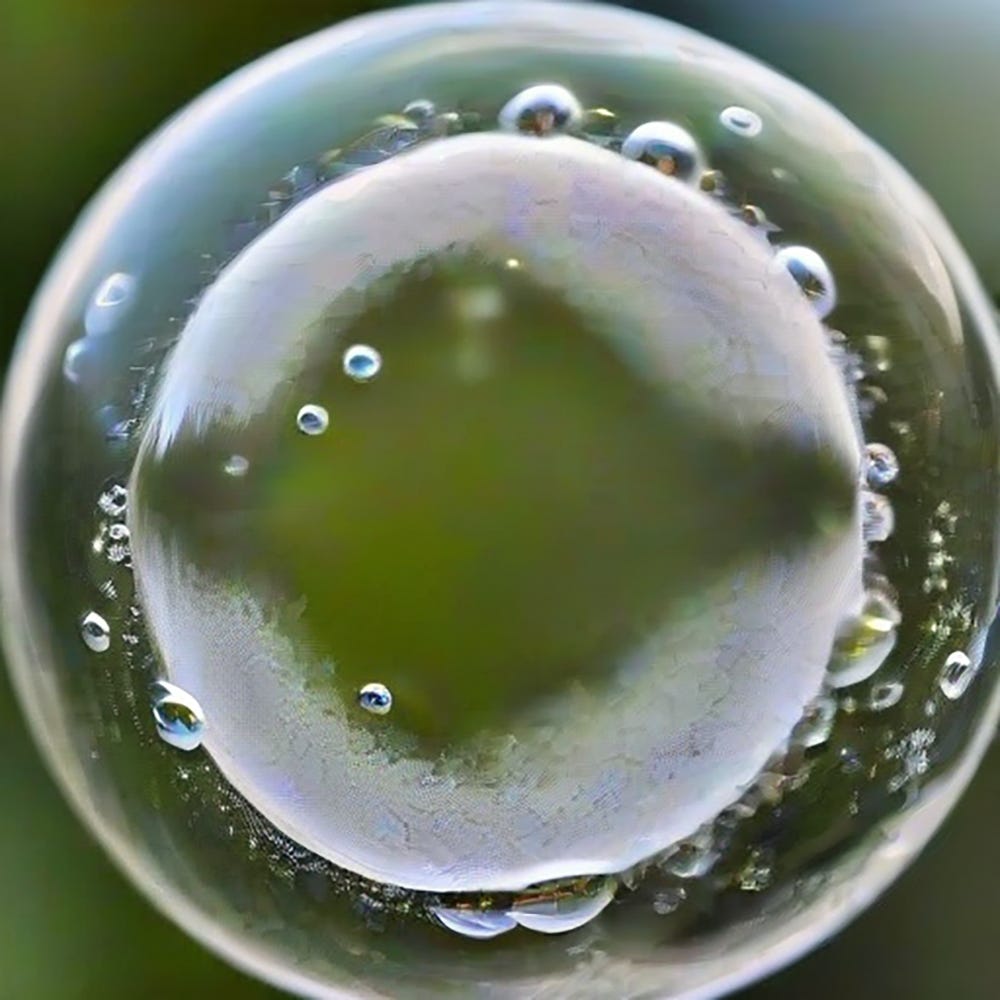
AI images, or what are often referred to as synthetic media, do not have the same transformative or corroborating quality. If we know they’re synthetic from the jump, we, as viewers, do not question their authenticity. Instead we ogle technology’s capacity for imitating the real. That’s why, for this project in particular, I use generative AI as an ideation tool, where I feed Marin’s words into a text-to-image system and see what it spits out. I’ve taken a lot of care to control the tools I use in ways that will allow for a less literal and more associative quality to emerge. Those synthetic images, which are vague and nonsensical, are what I then bring into the studio to make photographs from.
What creates a sense of wonder in me about, say, aura or spirit photography is the speculative potential. They are parafictional in nature. Before we realized what photography’s capacity was and where its shortcomings lay, we used it to dream into the unknown. Dreaming into the unknown in this day and age is a different proposition altogether, because photography is prolific and we as a culture have “seen” everything through photographs. I need to, and want to, dedicate myself to eliciting that same sense of wonder through subverting the photographic image.
Fascinating process notes, and I love this term "parafictional." Thank you!
I feel like that's a term that deserves wider use in the writing community. It feels so relevant in today's world—such an apt idea to have in mind when considering how to explore and express the realities of the 21st century.